
Elijah Z Granet

26 Dec 2025; 4 Car III

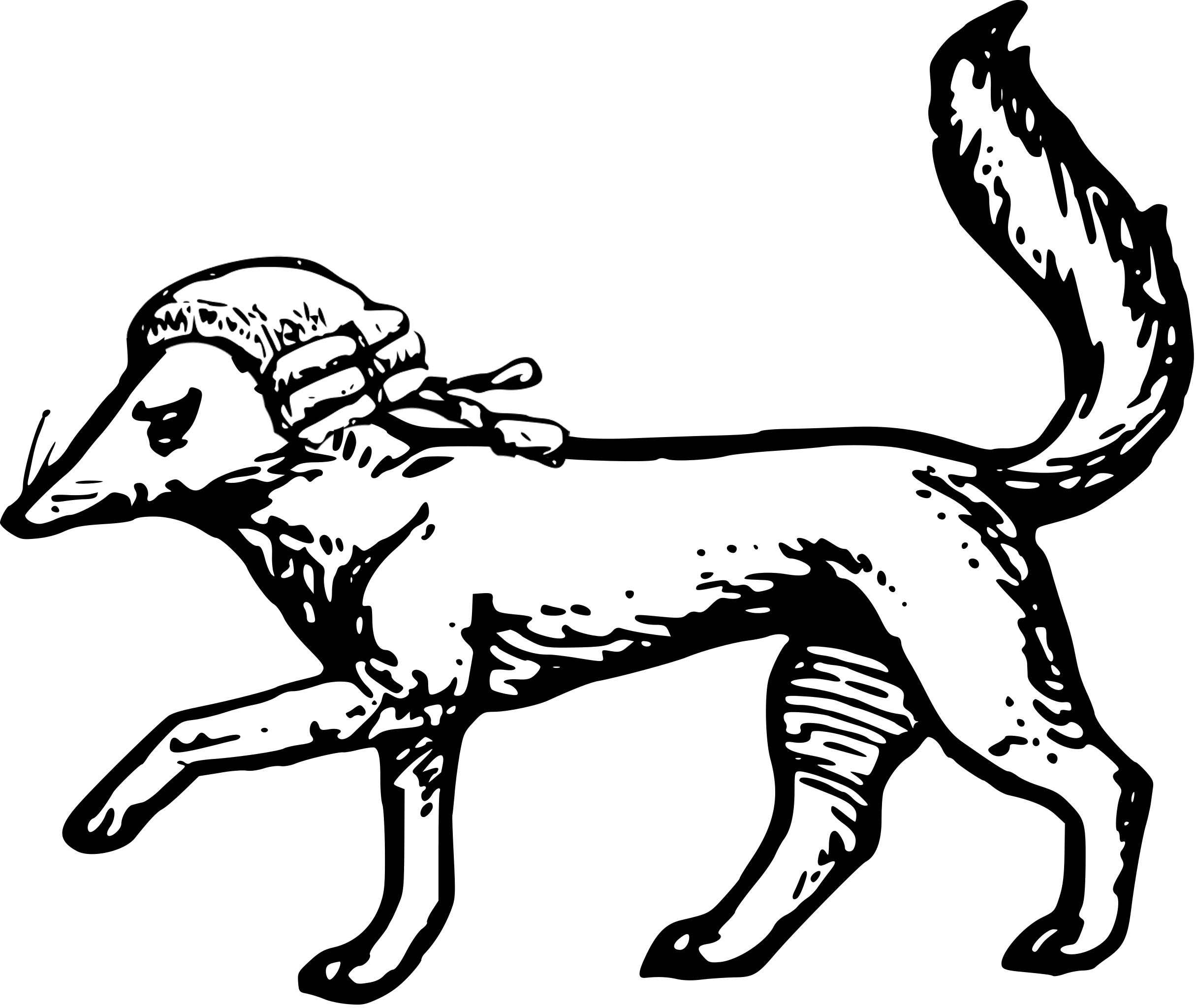
Every year, on the twenty-sixth day of December, this publication takes a moment to celebrate the wonderful world of fox law, in honour of a beloved vulpine pillar of the legal community who was so tragically beaten to death by a rather unfortunate character of the aforesaid community some years ago. Let us now rejoice in the wondrous world of vulpine jurisprudence!
It is not just one barrister with a baseball bat who has maltreated the fox. Our entire profession has blame to take. The fox has long been treated with disdain in jurisprudence. Consider, for instance, the Salic Law, from the start of the sixth century. Title XXX, § 4, reads:
Si quis alterum vulpe clamaverit, solidos III culpabilis judicetur. Jakob Friedrich Behrend & Richard Behrend (eds), 57 Lex Salica (2nd edn, Hermann Böhlaus Nachfolger 1897
He who calls someone else a fox shall be liable to pay one hundred twenty denarii (i e, three solidi). Katherine Fischer Drew (tr), The Laws of the Salian Franks 94 (University of Pennsylvania Press 1991)
To think that to be called a ‘fox’ was an insult so terrible as to be specified in a law code! Since then, the fox has rarely had a break, the poor thing. For instance, two dozen of them have been hauled into court as defendants (well, in a fashion). In United States v 24 Live Silver Black Foxes, (1924) 1 F 2d 933 (W D Washington) foxes were seized by customs at the port of Seattle, due to a dispute over alleged fraud on the declaration. After the seizure, the vixens amongst the foxes further gave birth, adding twenty whelps to the total. This led to an in rem libel being filed against the foxes and whelps. Hence, the delightful title of the case (sadly, the foxes were not actually active defendants). With the United States ‘not having facilities to care for the whelps’ (no one expected so many foxes), a further was filed in the court seeking their summary sale.
Remarkably, this led to some fascinating philosophical questions. The relevant statute applied a duty on live animals, but the whelps had not been born at the time the foxes were imported int other United States. The result was that Neterer J had to ask ‘What is a live animal?’ and then, shortly after, start quoting Blackstone on the point at which human life begins. Could the idea of en ventre sa mere apply here? Fortunately, biology swooped in to save the judge from any further problems. His Honour consulted the relevant agricultural data on the gestation period of foxes to conclude that the relevant foxy act leading to conception must have occurred after the animals’ entry into the United States. Thus, the whelps were outside the tariff statute and no civil liability could attach to them. They were therefore excepted from the libel. ibid, 934 It is a great sign of justice in action that twenty fox whelps can prevail against the government!
The above case concerned silver black foxes, who, like many of their vulpine brethren, are distinguished in name by a colour preceding the noble gens fox. Fox law covers the entire visible spectrum of pelts. For example, in Provincial Fox Co v Tennant, (1915) 21 DLR 236, NSSC (CA) the parties had entered into a contract for the sale of two pairs of blue foxes. The plaintiff company was known for a particular breed of blue foxes, but sadly could not produce any in the year the contract specified. Therefore, the plaintiff, to meet the contract, was willing to procure other blue foxes of another breed from Alaska. The defendant argued that the contract’s circumstances and objective intent indicated that the agreement was specifically about the plaintiff’s special breed of blue fox. At first instance, the defendant prevailed, on the basis that it was reasonable to interpret the contract as being for the specific breed the plaintiff sold in its ordinary course of business. However, on appeal, Ritchie J (with whom Graham EJ agreed) emphasised that ‘court, in getting at the intention of words used in a contract, has regard to the particular facts and circumstances in respect of which the words are used and construes them accordingly.’ ibid, 241f ‘Blue foxes’ was quite a definite description, making it difficult for surrounding circumstances to displace this. The mere fact the contract mentioned that ‘the plaintiffs own a certain kind of foxes known as blue foxes’ could not be read as objective evidence that the contract was only for foxes personally bred by the plaintiff. ibid, 243 Russell J similarly found that the only way to change the meaning in the writing would be to import parol evidence (which His Honour suggested the judge below had ‘unconsciously’ done). ibid, 240f Contract law orthodoxy was thus sustained and the blue fox made its mark in the law.
I began this journey into fox law with the Salic slap against our furry friend. Yet, the fox is occasionally handed a victory of equality, albeit in a way that involves killing and skinning it. In In re Unemployment Insurance Act 1935, [1938] 2 KB 675, HC there was a question referred by the Minister of Labour: did, for the purposes of statutory classifications relating to unemployment insurance contributions, work feeding and watering foxes on a silver fox farm count as agricultural work? Branson J found little helpful in precedent and statute, leaving the case to be decided ‘as a matter of first impression’. ibid, 679 His Lordship thus found that the only way to exclude the raising of foxes from the definition of agriculture would be to say that ‘agriculture is stereotyped and that no animal which has been By introduced within the memory of man can properly be treated’ as live stock. ibid, 682 The result was a stirring passage of animal equality in the eyes of the law, in which, to paraphrase Tennyson, freedom truly did broaden down from precedent to precedent:
I can see no distinction to be drawn between these foxes and sheep, which, of course, may be grown for mutton, or may be grown for their fleece, and I suppose one might imagine that some sheep may be grown rather for the one reason than for the other. I think it is impossible to say that no animal can be the subject of agriculture when it is being raised upon the land by the produce of the land, unless its flesh is used for human consumption, and that seems to me to be the only real way in which one could distinguish foxes, or mink, from other things such as pigs or cattle, which are undoubtedly live stock in the ordinary sense of the word, and the raising of which, and the feeding of which, and the tending of which, would obviously be regarded by everybody, so long as it is done in the ordinary way upon a farm, as an agricultural pursuit. ibid
This glorious rhetoric, holding that the fox and sheep are equally valid for the purposes of 1930s unemployment insurance legislation, is a fitting place to end our tour of fox law for this year. As we come to the end of this Foxing Day, it is worth taking a moment to reflect. This is always a bittersweet milestone in the calendar. We mourn our dear departed legal fox friend, in whose honour this day was established, and we rage at his violent end at the hands of a fox-thwacking kimono-clad rapscallion. Yet, we celebrate that great vulpine lawyer’s life and take solace in the promise of great legal foxes to come. The future holds great things for fox law, if we all together commit to continuing the glorious tradition of vulpine jurisprudence. Until next year, happy Foxing Day!

© 2025; 4 Car III, Elijah Z Granet, but licensed to all under the terms of Creative Commons licence
CC-BY-SA 4.0
Published by

GRANET PRESS
LIMITED
Comments
Post a Comment
Contributions are always welcome!